Thursday, 8 September 2016

iPhone 7 and 7 Plus


iPhone 7 & 7 Plus Design


If you’ve seen any of the iPhone 7 leaks you’ll know not much has changed in terms of design, but those familiar antenna bands have now migrated to the edges of the device rather than the back. The enclosure creates the housing for the camera bump because it is all crafted from the same bit of aluminium.
There are two new iPhone 7 colors: Jet Black and regular Black. Jet Black is the piano black you might have heard about and it is glossy and sexy as all get out. Black is more of a matte black but will definitely appeal to those that aren’t into building their fingerprint collection. You’ve also still got options for Gold, Silver and Rose Gold.

iPhone 7 & 7 Plus Home button

The home button has been re-engineered from the ground up and it is customizable on the iPhone 7. The iPhone 7’s solid state home button is now Force Touch sensitive and works together with Apple’s Taptic engine to be more responsive to a wider range of frequencies. According to Cook, it provides and “incredible new feel”.
What’s more, the new home button is used throughout iOS, providing unique feedback for messages, notifications, ringtones and navigation. It actually sounds pretty cool, meaning you’ll know by touch alone what is going on with your iPhone 7, but as we’ve seen with other attempts to move to pressure sensitive sensors (across tech in general), it’ll more than likely divide opinion.

IP67 water resistant

For the first time, Apple has released a water-resistant iPhone. With an IP67 certification, the iPhone 7 and 7 Plus are protected against harmful dust particles (but they are not dustproof) as well as high-powered water jets and splashes. The IP67 certification means that it is now on par with many Android flagships that have been IP67 rated; Apple may have taken a while to launch this but at least they didn’t say it was a ‘ground-breaking revolutionary feature’, eh?

iPhone 7 & 7 Plus Camera

Apple introduced all-new cameras on the iPhone 7 and iPhone 7 Plus. They feature optical image stabilization, meaning they can comfortably handle up to three times longer exposures. The f/1.8 aperture six-element lens lets in 50% more light too.
The new 12 MP sensor is 60% faster and 30% more energy efficient than the iPhone 6s and the True-Tone flash now has four LEDs and a Flicker Sensor that reads the flickering of artificial lighting for even better exposures.


The iPhone 7s gets a new image signal processor that has twice the throughput of previous versions. It uses machine learning to set exposure, focus and color balance, all in 25 milliseconds. I don’t care what anyone says, this new iPhone 7 camera is going to be good.
If you opt for the larger-screened iPhone 7 Plus, you’ll even get a second 12 MP camera on the back: a regular wide-angle lens and a second telephoto lens. The two lenses not only allow you to switch between wide-angle and zoom photography, they will also work in concert with software to create a depth map of the scene in front of the lenses. This all happens automatically in Portrait mode.
Dual lenses certainly aren’t new – Apple is merely playing catch up to a plethora of dual-camera phones including the Honor 8, Huawei P9 Plus, LG V20 and the LG G5 – so it’ll be interesting to see how Apple’s implementation compares to that of its Android competition.

Although the new iPhone 7 Plus won’t ship with this new depth-mapping feature, it will be a free update later in the year. What it does is essentially allow the software to analyse the image and create an artificial Bokeh effect by distinguishing between the subject and de-focusing the background.
The new iPhones supposedly have improved low-light performance thanks to the larger aperture, a faster sensor speed supports high-speed exposures and you even get OIS when shooting Live Photos, which are now supported by third-party apps. Oh, and RAW file support has finally come to the iPhone (time to buy the high storage capacity version kids…) and it’s long overdue, considering how long it’s been available on Android. That being said, a very welcome feature addition for iPhone users.
Both new iPhones come with a 7 MP FaceTime camera up front with auto-image stabilization. Improved color capture capabilities guarantee better looking selfies than on any previous iPhone.

iPhone 7 & 7 Plus Price and release date

The iPhone 7 release date is September 16 with pre-orders as of September 9. The iPhone 7 price starts at $649 for the 32 GB version (with options up to 256 GB) and the iPhone 7 Plus price starts at $769 for the 32 GB version (again, with models up to 256 GB).

To put that in perspective, those are the same price points as the iPhone 6s and 6s Plus, except you get double the internal storage for the same price. Because that means no one would probably bother with the iPhone 6s or 6s Plus any more, Apple is also upping the storage on last year’s models. The brand-new Jet Black iPhone 7 only comes in 128 GB and 256 GB options, making it the new “must-have”.

Friday, 2 September 2016

Google officially ends its Project Ara modular phone initiative


Google has shut down its modular smartphone initiative, Project Ara, a spokesperson confirmed to VentureBeat today. This follows an earlier report from Reuters that claimed Google was finished with Project Ara. We've reached out to Google for confirmation and will update this article as the company responds.
The spokesperson didn't offer any details about the shutdown, VentureBeat reports, though Reuters said it was "part of a broader push to streamline the company's hardware efforts." A modular design complicates the hardware production process since Google would not only have to manufacture a bunch of smartphones but also all of the detachable cameras, battery packs, speakers and other accessories that would make each phone unique. Project Ara has been in the works for three years at Google and in August of last year its public reveal was delayed to 2016. 
However, Project Ara may live on. Reuters says that Google might still license out the project's technology to other manufacturers.

Samsung is recalling the Galaxy Note7 over battery fire hazard, sales halted

Image result for galaxy note 7
The reports about Samsung Galaxy Note7's battery catching on fire have been spreading throughout the last few days and Samsung quickly acknowledged the issue and said there is an ongoing investigation. A prompt and swift decision was promised and the official press release is now out.
Samsung is now recalling all Galaxy Note7 around the world. A replacements will be issued ASAP to all users who return their phablet, regardless of date of purchase.
Meanwhile all Note7 sales are suspended until the faulty devices are withdrawn from the market and only unaffected Note7 units remain in circulation.
Koh Dong-jin, head of Samsung's handset business division, assured the press that only 24 of every 1 million devices are at risk, but the company won't be taking any chances with its users.
Samsung is committed to producing the highest quality products and we take every incident report from our valued customers very seriously. In response to recently reported cases of the new Galaxy Note7, we conducted a thorough investigation and found a battery cell issue.
To date (as of September 1) there have been 35 cases that have been reported globally and we are currently conducting a thorough inspection with our suppliers to identify possible affected batteries in the market. However, because our customers’ safety is an absolute priority at Samsung, we have stopped sales of the Galaxy Note7.
For customers who already have Galaxy Note7 devices, we will voluntarily replace their current device with a new one over the coming weeks.
We acknowledge the inconvenience this may cause in the market but this is to ensure that Samsung continues to deliver the highest quality products to our customers. We are working closely with our partners to ensure the replacement experience is as convenient and efficient as possible.
While Samsung designed the battery cell, it outsourced the manufacturing to other companies and one of those factories is to blame for the faulty battery.
It's good to see Samsung is putting users' safety first no matter the cost of this massive recall campaign. We hope this gets resolved quickly as the competition is surely having a ball in the mean time.

Google Pixel XL camera details leaked


A few details about the cameras employed by the upcoming Google Pixel XL smartphone have been leaked today by a person with a reasonably good track record. According to him, the bigger of Google's duo of devices being outed on October 4 will go with Sony-made sensors for both rear and front-facing shooters.
The main camera will have 12 MP resolution and will use the Sony IMX378 sensor. There aren't any details about this model yet, but if you keep in mind that last year's LG Nexus 5X and Huawei Nexus 6P both featured the Sony IMX278, it stands to reason that the new sensor comes with improvements compared to that. And that would be great, since the IMX278 was no slouch at all.
Taking care of selfies will be the Sony IMX179, with 8 MP resolution ensuring you can print your ego-stroking creations on very large sheets of paper if need be. The smaller Pixel may share both of the cameras with the Pixel XL, but today's rumor only mentioned the bigger sibling.

Google Pixel, Pixel XL reportedly launching on October 4

Image result for Google Pixel, Pixel XL
For some reason, Google has reportedly decided to drop the Nexus branding
After releasing the latest Android Nougat version last month, Google is now reportedly planning to launch its own smartphones.
Google has allegedly dropped the 'Nexus' line up and the new devices from Google will be named as the 'Pixel' and 'Pixel XL' which will be launched on October 4, 2014. HTC is reportedly manufacturing both the devices.
Pixel is supposed to be the cheaper variant which is code named as 'Sailfish' and Pixel XL will be the 'Marlin' variant. Both the phones are expected to come with quad core processor and 4 GB of RAM and same 12 megapixel rear facing camera.
The Pixel XL will be the larger variant with 5.5 inch display and will even sport a bigger battery compared to the Pixel which will come with 5.0 inch display.
Last year, Google launched a tablet under Pixel branding.
As per reports, the new Google devices will have some exclusive features like a new launcher and smartGoogle assistant.
Earlier this year, Google's CEO Sundar Pichai hinted something like this in his speech at the Recode's Code Conference where he mentioned the company is looking to be more opinionated with its own launcher.
Apart from the new smartphones, Google is also likely to launch the new 4K chromecast which will stream 4K content through your device. Other than that, a new Daydream VR device is also likely to be unveiled at the October 4 event.
Last month, Google released its new Android version - Android Nougat, much before the patterned time. Meanwhile, LG V20 will be the first phone to run on the latest Android version out of the box and will be launching in the next few days.

Smartphone with two CPUs, 60MP camera, three batteries and 12GB RAM announced

                                 Image result for Turing Phone Cadenza.
The phone will be launched next year and is named as Turing Phone Cadenza.
Turing Robotics Industries (TRI), a Finland based company that builds mobile technology, has announced a first of its kind smartphone which has two processors, three batteries, huge 12 GB RAM and an unbelievable 60 megapixel camera!
The handset, named as Turing Phone Cadenza, is expected to be launched next year.
Announcing the phone, Steve YL Chao (CEO & Chief Architect, Turing Robotics Industries) termed it as the "perfectly designed device". And perhaps it is.

To start with, the Turing Phone Cadenza has two Snapdragon 830 processors. Note that the Snapdragon 830 processor will be released by Qualcomm in the first quarter of 2017. The Cadenza will have whooping 12GB of RAM (2x 6GB RAM). It is to come with 500 GB of internal storage and its expandable slot can hold a micro SD card of up to 500 GB, which means if all avenues are fully utilized the phone will have storage space of 1TB. On top of that it will have a 5.8-inch QHD display.
The Cadenza smartphone will have body of "graphene oxide" with liquid metal frame and 60-megapixel iMAX 6K Quad Rear Camera that will have Triple Lens. As per its makers, the phone will have two 20-megapixel front cameras. The smartphone will run on the Swordfish, an unannounced operating system, which might be based on Sailfish.
Moreover, it will be coming with three batteries with total 100wh of power, including a 2400 mAh graphene super-capacitor battery, a 1600 mAh lithium ion battery, and a hydrogen fuel cell. It is also equipped to read four nano SIMs simultaneously. Besides, this smartphone supports 4G network with VoLTE and WiGig Network Support apart from Marshall Audio technology.

Tuesday, 16 August 2016

Asus to launch Zenfone 3 phones in India today, might launch ZenPad 3 too


Asus will launch Zenfone 3 series phones in India. There are three phones in the Zenfone 3 series - Zenfone 3, Zenfone 3 Deluxe and Zenfone 3 Ultra. These phones were first unveiled at the Computex event in Taipei in May this year. Meanwhile, we are also expecting Asus to launch its recently announced ZenPad 3 tablet during the event as well.


The Zenfone 3 comes in gold, blue, black, and white colours. It has Corning Gorilla Glass coating on both front and back panels while an aluminimum frame protects its internals. The Zenfone 3 has a 5.5-inch LCD screen, a Snapdragon 625 processor, a 16-megapixel rear camera, an 8-megapixel front camera, a 3000 mAh battery, a fingerprint sensor, USB-C 2.0 port, 4GB RAM, and an expandable storage slot that can hold a micro SD card of up to 64GB. The Zenfone 3 is priced at $249 or Rs 16,755 respectively.


The Zenfone 3 Deluxe and Zenfone 3 Ultra have metal unibody. The Zenfone 3 Deluxe has been announced in gray, silver, and gold colours. It has a slightly bigger 5.7-inch 1080p OLED touchscreen, Snapdragon 820 processor, a 23-megapixel rear camera, USB-C 3.0 port, and 6GB RAM. The Deluxe is priced at $499 or Rs 33,577 approximately for the 6GB of RAM plus 64GB internal storage variant. A 256GB of Zenfone 3Deluxewill be launched later.


The Zenfone 3 Ultra has a huge 6.8-inch LCD screen that comes with full HD resolution. It is powered by a Snapdragon 652 processor and 4GB RAM. It too has a 23-megapixel rear camera, USB-C 3.0 port but comes with a bigger 4,600 mAh battery. The Zenfone 3 Ultra comes in gray, silver and pink colours. The Ultra has a price tag of $479 or Rs 32,238 approximately.


ZenPad 3 8.0 has a 7.9-inch IPS (2048×1536p) display that comes with anti-fingerprint coating. It comes with the 1.8 GHz hexa-core Qualcomm Snapdragon 650 processor, which is paired with Adreno 510 GPU. The tablet runs on Android 6.0 Marshmallow operating system that is wrapped under ZenUI 3.0 and for power, it comes bundled with a 4680 mAh non-removable battery which claims to offer up-to 11 hours of battery life.

The Asus ZenPad 3 8.0 comes in two variants - one with 2GB RAM with 16GB internal storage and the other with 4GB RAM with 32GB of internal storage. The ZenPad 3 8.0 memory can be further expanded by up-to 128GB via a micro SD card. The tablet has an 8-megapixel rear camera on the rear, and a 5-megapixel front-facing camera for video calling. Besides, the tablet offers 4G/LTE, WiFi (802.11 ac/b/g/n), Bluetooth 4.1, GPS/AGPS/GLONASS, USB Type-C, stereo speakers and a gyro and e-compass sensor. The tablet measures 205.4 x 136.4 x 7.57 mm and it weighs around 320 grams.

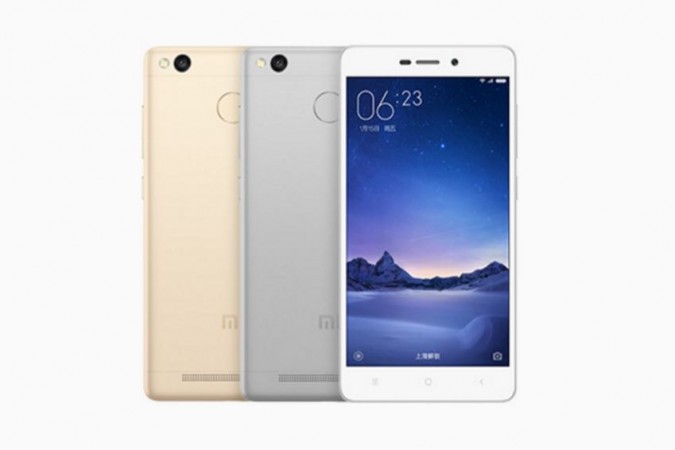
Xiaomi Redmi 3S, 3S Prime launched in India at Rs. 6,999, Rs. 8,999


Xiaomi has launched the Redmi 3S, Redmi 3S Prime in India. The device features a metal body and is available in two variants, one with 2GB RAM/16GB expandable storage and the other, Redmi 3S Prime, with 3GB RAM/32GB expandable storage. The devices are available in gold, dark grey, and silver colour variants and are priced at Rs. 6,999 and Rs. 8,999 respectively. The Xiaomi Redmi 3S Prime will be available from August 9, while the Redmi 3S will be available from August 19. Both devices will be available exclusively on Mi.com and Flipkart without pre-registration. The phone features a 5-inch HD display and is powered by a Qualcomm Snapdragon 430 SoC. The device also features 13MP camera at the back with PDAF, while at the front is a 5MP camera. The Redmi 3S Prime also features a fingerprint scanner located at the back of the device. While the device is smaller than the Redmi Note 3, it features a larger 4100mAh battery, which the company claims to last up to two days with moderate use. The Redmi 3S was already launched in China a couple of months ago.


The Redmi 3S, Redmi 3S Prime will be up against the likes of the Lenovo Vibe K5 Plus, Coolpad Note 3 and even the 2GB RAM variant of the Xiaomi Redmi Note 3. Judging by the specifications, Xiaomi has a very impressive device on its hands and the company might be able to emulate the success of the Xiaomi Redmi Note 3 with the new phone. Stay tuned for a full review of the new phone.

Google's video-calling app Duo


Announced at its I/O developer conference earlier this year, Google has finally made its video calling app - Duo, available to the general public. The app boasts features like end-to-end encryption and claims to deliver a great user experience. Duo is set to take on the likes of WhatsApp, Facebook Messenger and WhatsApp.


Here's all you need to know about Google's newest video calling app.
The 'Knock Knock' feature

Google Duo app comes with an interesting feature called 'Knock Knock,' which previews a short video of the caller before the call is picked. Once the user answers the call, the audio turns on and the two parties can start the conversation. Android users can use 'Knock Knock' directly from the lockscreen without opening Duo. On the other hand, iPhone users will have to launch the app to check who's calling them.

'Knock Knock' can be disabled

'Knock Knock' is only available with contacts that are in a user's phonebook. Users can also block any other users from calling them by disabling the 'Knock Knock' functionality. This feature can be altogether disabled from the app's settings.

User friendly interface

Duo flaunts an immaculate and simple user interface. Before a call is started, users can see icons to start a video call with their recent contacts. During a call, options are presented that can be used to mute audio, switch cameras and hang up the call.

Works well on slow connections


Google claims that Duo can operate well even on slow network connections . Although all calls on Duo are in HD quality, the app can automatically adjust the video quality based on network strength.


Multi-platform

Like WhatsApp and Facebook Messenger is also multi-platform and is available on both iOS and Android.

Bottomline


With Duo, it seems that Google has managed to pick up quite some features from competing instant messengers (IMs) like WhatsApp and made them better with additional features like search functionality. Duo's features are likely to make things easier for users, as they will get search, booking and video calling features in one app. How well Duo manages to do against competitors like WhatsApp and Facebook Messenger, is something only time will be able to tell.

courtesy - TOI

Samsung to Launch 5000 mAh Battery phone in India

A Samsung phone packing in a mammoth 5,000mAh battery is set to be launched in India sometime next month, according to a new report. The phone in question is likely to be an ‘A series pro device," the report notes.
A Samsung A series Pro device with 5,000mAh battery - does that ring a bell? Yes, the handset could very well be the Galaxy A9 Pro (2016), which has already made its international debut - it was first launched in China back in March this year.

                               
Needless to say, none of this has been officially confirmed by the South Korean company

Monday, 4 January 2016

Moto G (3rd Gen) gets Android 6.0 Marshmallow in India

Motorola has given a New Year’s treat to its Moto G3 users in India as the phones will now be get an Android 6.0 Marshmallow update.
“Here is something new and amazing for your Moto G (3rd Gen.), the Android 6.0 Marshmallow!” Motorola India announced on its Twitter account.
However, the exact date of the rollout was not mentioned in the tweet.
The third-generation phone of the Moto G series will now https://t.co/0etB1IncHibe upgraded from Android 5.1.1 (Lollipop) to Android 6.0.
The 2 GB update will add features like “Doze Mode” to extend the battery life, Google Now on Tap and simpler volume control and would remove the “Migrate” and “Assist” apps.
How to check for the update:
Generally, the phone would notify you about the update. If, however, one does not receive the notification, one can manually check for the update by going to Settings > About Phone > System Update.
The Moto G comes with a 5-inch HD display with a layer of Corning Gorilla Glass 3. It will sport the Android 5.1.1 OS along with proprietary Motorola features such as Moto Display, Quick Capture and Chop Twice. The phone will house a Qualcomm Snapdragon 410 SoC with a 1.4GHz quad-core processor. This will be paired with 1GB of RAM for the 8GB storage variant and 2GB RAM for the 16GB storage variant.

On the camera front, you will get a 13MP rear snapper along with a 5MP front-facing camera. The Moto G will come in the dual SIM configuration and will support 4G SIM cards as well. A 2,470mAh capacity battery completes the package.

Moto 360 2nd gen now available on Amazon in India


Motorola has started selling the second generation Moto 360 on Amazon in India. Previously exclusive to Flipkart, the smartwatch can now be purchased from the country's other major online retailer.
Amazon has four versions of the watch on sale. The black version is available in 46mm with black metal band and in 42mm with black leather band. The silver version is available in 46 and 42mm in the cognac leather band. Flipkart still has a leg up on Amazon as it also sells the silver metal and gold leather versions.
The prices are same as before, ranging from INR 19,999 ($301) for the cheapest model to INR 24,999 ($377) for the most expensive one.